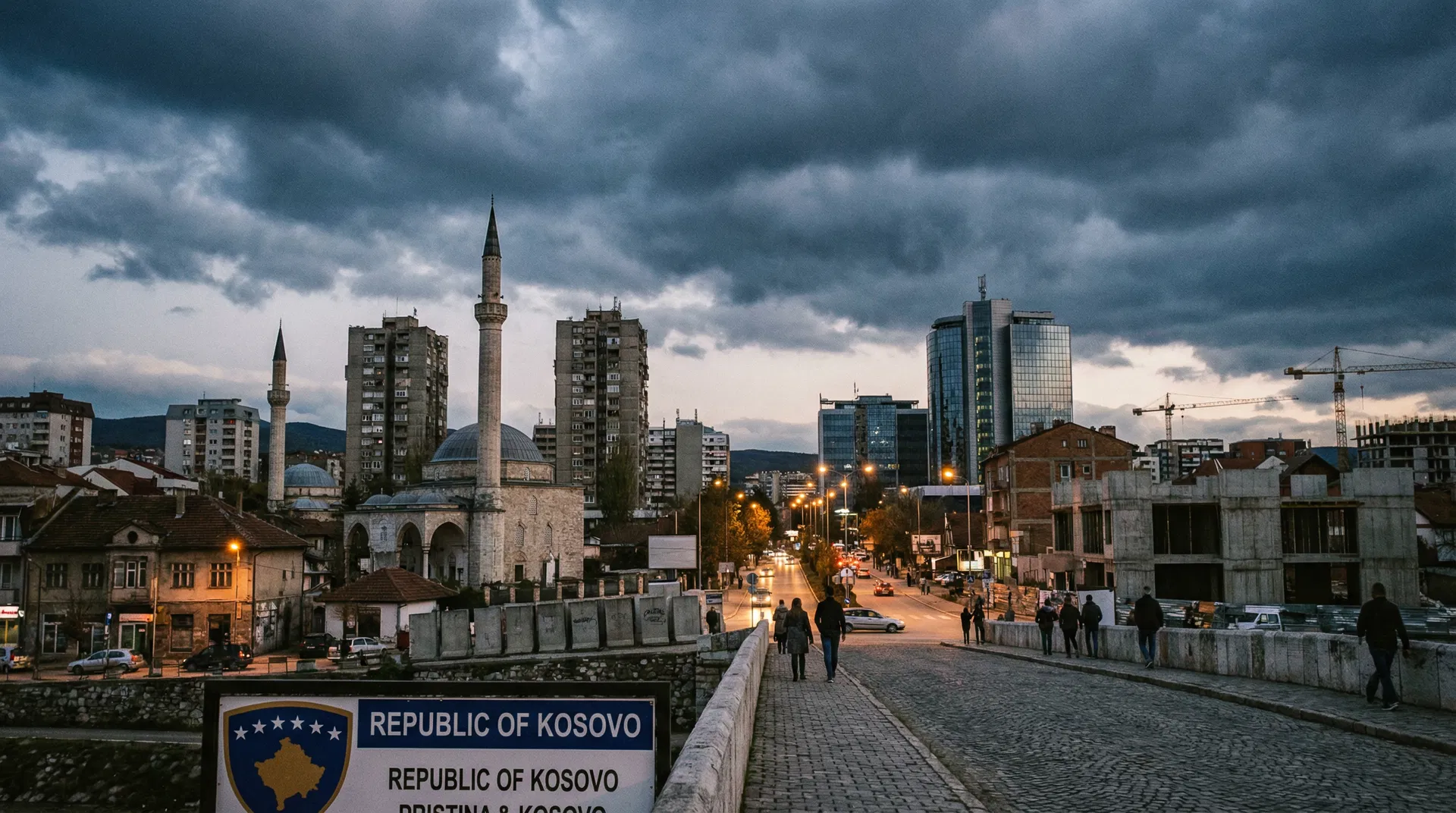
Kosovo
Kosovo is examined as a warning case — a frozen conflict that escalated to full-scale war following the systematic suppression of minority language and cultural rights. The 1974 Yugoslav constitution represented a near-resolution: genuine autonomy, Albanian-language institutions, cultural recognition. The revocation of that autonomy by Milošević in 1989 — with tanks surrounding the assembly — removed the institutional framework that had made coexistence possible. The decade that followed demonstrated the consequences with precision.
Key Fact
The 1974 Yugoslav constitution gave Kosovo near-republican autonomy and Albanian-language institutions — a near-resolution. Its revocation in 1989 with tanks surrounding the assembly produced a decade of suppressed grievance that escalated to war and NATO intervention by 1999.
Historical Timeline
| Period | Ruling Authority | Notes |
|---|---|---|
| Medieval | Byzantine Empire, then Serbian medieval states | Battle of Kosovo (1389) becomes central to Serbian national identity |
| 1459–1912 | Ottoman Empire | Albanian Muslim majority emerges over centuries; Albanian language and culture dominant in practice |
| 1912–1918 | Kingdom of Serbia | Serbian annexation; Albanian schools and language prohibited; tens of thousands expelled |
| 1918–1941 | Kingdom of Yugoslavia | Serbian colonisation policy; Albanian land confiscated; Albanian population ~65% of Kosovo |
| 1945–1974 | Socialist Federal Republic of Yugoslavia | Albanian population viewed as security risk; forced emigration of ~195,000 Albanians to Turkey by 1957 |
| 1974–1989 | Socialist Autonomous Province of Kosovo | 1974 constitution grants near-republican autonomy; Albanian-language education and institutions restored; Albanian majority ~77% |
| 1989 | Serbia under Milošević | Autonomy revoked; Albanian language removed from schools and public life; Albanian teachers, doctors, civil servants dismissed en masse; tanks surround Kosovo assembly |
| 1989–1998 | Republic of Serbia | Decade of suppressed grievance; Ibrahim Rugova leads non-violent resistance; Kosovo Liberation Army emerges 1996 |
| 1998–1999 | Kosovo War | Armed conflict; NATO intervention March 1999; estimated 10,000–12,000 Albanian civilians killed; ~860,000 displaced |
| 1999–2008 | UN administration (UNMIK) | Serbian forces withdraw; NATO-led KFOR deployed; ~164,000 non-Albanians flee |
| 2008–present | Republic of Kosovo (partially recognised) | Unilateral declaration of independence; recognised by ~108 UN member states; Serbia, Russia, China do not recognise |
Foreign Policy Analysis
Three-level analysis: systemic, state, and individual factors
Systemic Level
The Milošević government's revocation of Kosovo's autonomy in 1989 was enabled by the absence of any effective supranational framework to constrain Serbian state action. NATO's 1999 intervention demonstrated that such a framework could be created retroactively — but only after the conflict had escalated to war. The lesson for Narva and Transnistria is that the EU and NATO frameworks must be used preventively, not reactively.
State Level
The 1974 Yugoslav constitution demonstrated that genuine autonomy — Albanian-language education, cultural institutions, political representation — made coexistence viable. Its revocation demonstrated the opposite. The Kosovo case is the clearest available evidence that the suppression of minority language and cultural rights has a documented trajectory toward armed conflict.
Individual Level
A decade of non-violent resistance under Ibrahim Rugova demonstrated that the Kosovo Albanian population was not seeking war — it was seeking recognition. The emergence of the KLA in 1996 followed a decade of peaceful protest that produced no institutional response. The individual-level dynamic maps precisely onto the conditions that preceded the Troubles in Northern Ireland and the Tamil insurgency in Sri Lanka.